

From new equipment and tire inventory to garage construction and business expansion, Auto Shop Lend helps automotive businesses find financing options to keep their shops running and growing.

Automotive facility expansion financing and engine diagnostic equipment financing may help qualified automotive businesses expand service locations, upgrade facilities, and acquire advanced diagnostic technology. Specialty automotive repair loans and automotive financing companies can provide funding options for eligible equipment purchases, working capital, renovations, and other automotive business growth needs.
Financing options designed around the needs of automotive repair and service businesses.
Get the funding you need to keep the parts, tires, and products your customers need in stock.
Upgrade the tools and equipment that help your technicians work efficiently and serve more customers.
Take your shop to the next level with financing options for improvements, expansion, and growth.
Whether you’re looking for equipment, inventory, construction, repairs, or expansion financing, start by telling us about your business and what you’re looking to accomplish.
Your shop is different from a typical business. Your financing needs can involve equipment, inventory, facilities, vehicles, tools, and expansion.
Whether you need inventory financing, construction financing, or funding for your next expansion, explore options for the needs that matter to your business.
When equipment needs replacing or inventory needs replenishing, access to the right financing can help you keep your business operating.
Opening another location? Expanding your garage? Adding services? Financing can help you turn your next business opportunity into a plan.
Whether you’re building a new garage, adding equipment, stocking up on inventory, or expanding your automotive business, Auto Shop Lend can help you explore financing options for your next move.
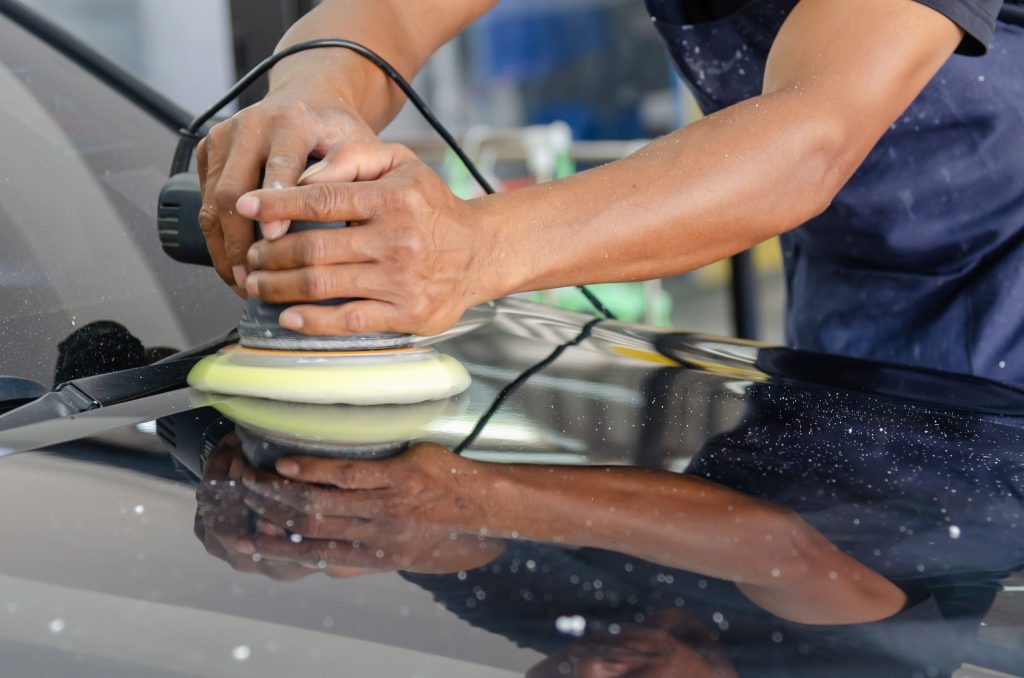
An automotive technician operates a powered polishing machine on the glossy surface of a vehicle in a professional service environment. Funding options such as Automotive facility expansion financing, engine diagnostic equipment financing, specialty automotive repair loans, and automotive financing companies may help qualified businesses invest in equipment, technology, facility improvements, and other eligible expenses associated with expanding automotive repair and specialty service operations.
From everyday business needs to major expansion projects, explore financing options designed around automotive businesses and the work they do every day.
Auto Shop Lend focuses on financing for automotive businesses. The site helps shop owners explore financing options for business needs such as equipment, inventory, construction, expansion, and other shop-related expenses.
Depending on the financing option, funds may be used for business needs such as equipment, inventory, facility improvements, construction, expansion, and other qualified expenses.
Auto shops often need specialized equipment to operate and grow. Auto Shop Lend helps businesses explore financing options for equipment and other business needs.
Tire inventory can represent a significant expense for tire dealers and automotive service businesses. Inventory financing can help eligible businesses explore funding for stocking the products they need.
Garage construction financing can help eligible automotive businesses explore funding for building, expanding, or improving their facilities.
Yes. Auto repair shop expansion may require additional space, equipment, inventory, or facility improvements. Auto Shop Lend helps businesses explore financing options for these types of growth projects.
Transmission shops have specialized equipment, tools, inventory, and operating needs. Auto Shop Lend provides financing-focused resources for automotive businesses looking for funding options.
Automotive repair businesses often reach a point where growth requires more than adding a few tools or hiring another technician. Expanding a building, adding service bays, purchasing advanced diagnostic systems, entering a specialized repair niche, or comparing lenders can involve substantial financial commitments.
Financing can help qualified businesses spread eligible expansion costs over time rather than using all available cash at once. The right approach depends on the purpose of the project, expected cash flow, useful life of purchased assets, borrower qualifications, and financing terms.
The following nine sections examine practical ways automotive businesses can plan an expansion while protecting working capital and avoiding unnecessary debt.
A growing repair operation can eventually run out of productive space. Additional service bays, customer areas, parts storage, parking, electrical capacity, ventilation improvements, offices, and specialized work areas may become necessary as repair volume increases. Automotive facility expansion financing can potentially help qualified businesses fund eligible improvements rather than paying the entire project cost from existing cash.
Expansion often creates equipment requirements as well. engine diagnostic equipment financing may help qualified shops acquire eligible scan tools, testing systems, analyzers, computers, and other technology needed to support additional service capacity.
Some businesses expand by developing higher-value niches. specialty automotive repair loans may be worth researching when a qualified company needs capital for equipment, improvements, or other eligible expenses associated with services such as performance work, diesel repair, transmission service, restoration, collision work, or advanced electrical diagnosis.
Owners can also compare automotive financing companies when determining which financing structure fits their project.
Before construction begins, management should create a complete project budget. Costs can extend beyond construction and equipment to permits, installation, professional services, inventory, signage, software, employee training, insurance changes, and working capital.
A contingency reserve can also be valuable because renovations and equipment installations sometimes reveal expenses that were not apparent during initial planning.
Modern repair businesses increasingly rely on technology to identify mechanical, electrical, and computerized vehicle problems. Purchasing the right equipment can improve a shop’s capabilities, but technology should be selected according to the vehicles and services the business actually handles.
engine diagnostic equipment financing may provide qualified shops with a way to acquire eligible diagnostic technology while preserving cash for everyday operating expenses.
If new technology requires electrical upgrades, dedicated work areas, or additional bays, Automotive facility expansion financing could potentially form another part of the overall project.
A company entering a more technical repair category may investigate specialty automotive repair loans when qualifying equipment and other eligible investments are necessary to support the new service line.
Businesses should compare terms from appropriate automotive financing companies rather than evaluating a financing offer solely by its advertised payment.
The complete cost of diagnostic technology may include hardware, software, subscriptions, updates, computers, accessories, training, calibration, technical support, and replacement expenses. Those costs should be incorporated into the investment calculation.
Management should also estimate how frequently technicians will use the new equipment. A relatively expensive diagnostic system can make economic sense when it supports significant repair volume or reduces outsourced work. The same purchase may be difficult to justify if technicians use it only occasionally.
Equipment should ultimately improve productive capability rather than simply make the shop appear more technologically advanced.
Specialization can allow an automotive company to distinguish itself from general repair competitors. Potential areas include engine rebuilding, diesel service, performance upgrades, transmission repair, restoration, commercial vehicle service, advanced electrical work, and other technical niches.
specialty automotive repair loans may help qualified businesses finance eligible investments required to establish or expand these capabilities.
Many specialty services require dedicated equipment and work areas. Automotive facility expansion financing may therefore be relevant when an existing location needs additional space or improvements before the business can accommodate the new work.
Accurate troubleshooting can also be essential to specialized repair. engine diagnostic equipment financing could potentially help qualified businesses acquire eligible systems needed to identify problems before expensive repairs begin.
Owners comparing automotive financing companies should consider total borrowing costs, repayment structure, fees, collateral requirements, guarantees, and other contractual provisions.
Before entering a niche, management should study customer demand. A specialized machine or dedicated service bay has limited economic value when insufficient repair volume exists to keep it productive.
Owners can review existing customer requests, jobs currently referred elsewhere, local competition, average repair values, technician expertise, and equipment utilization.
The strongest specialty expansion usually connects an identifiable market opportunity with equipment and personnel capable of serving that opportunity efficiently.
Facility and equipment investments frequently occur together. Adding several service bays may require additional lifts, compressed-air systems, diagnostic technology, storage, lighting, electrical improvements, and technician workstations.
Automotive facility expansion financing may help qualified businesses address eligible construction, renovation, or facility-related expenditures associated with growth.
At the same time, engine diagnostic equipment financing may provide another potential method of acquiring qualifying technology needed for the expanded operation.
When a project is designed around a particular repair niche, specialty automotive repair loans could potentially be evaluated for eligible machinery, equipment, or other business expenses.
Comparing automotive financing companies can help owners understand differences among financing products instead of assuming every commercial loan or equipment agreement operates the same way.
Owners should separate their project into long-term and short-term expenses. A building improvement that will be useful for decades has different financial characteristics from inventory that may turn over in several months or software that requires an annual subscription.
Matching financing terms to the expected economic life of an investment can help avoid situations in which a business continues making payments long after an asset has become obsolete.
Management should also calculate the combined monthly obligation if multiple financing products are being considered. Several individually affordable payments can become significant when added together.
Consider a hypothetical repair business planning a $700,000 expansion. The figures below are illustrative only and are not industry averages, lender offers, recommended borrowing amounts, or estimates of what a particular shop should spend.
| Example Project Category | Illustrative Amount |
|---|---|
| Building and bay improvements | $240,000 |
| Diagnostic technology | $125,000 |
| Specialized repair equipment | $115,000 |
| General shop equipment | $80,000 |
| Parts and inventory | $65,000 |
| Working-capital reserve | $75,000 |
| Total | $700,000 |
Illustrative $700,000 Project

Building/Bay Improvements   $240,000  ████████████████████████
Diagnostic Technology       $125,000  █████████████
Specialized Equipment       $115,000  ████████████
General Shop Equipment       $80,000  ████████
Operating Reserve            $75,000  ████████
Parts & Inventory            $65,000  ███████
In this hypothetical example, Automotive facility expansion financing could potentially be researched for qualifying building improvements, while engine diagnostic equipment financing could address eligible technology purchases.
Management might also investigate specialty automotive repair loans for qualifying equipment associated with a new service line and compare appropriate automotive financing companies before selecting a provider.
The graph demonstrates why expansion planning should include more than machinery. A business that spends nearly all available capital on its building and equipment could find itself short of money for inventory, payroll, utilities, insurance, and marketing.
Working capital provides a financial cushion while the expanded operation develops additional revenue. Actual reserve requirements vary significantly by business, so owners should build projections using their own operating expenses and expected cash-collection cycle.
Automotive business owners can also investigate programs backed by the U.S. Small Business Administration. SBA’s 7(a) program can be used for qualifying purposes including acquiring or improving real estate and buildings, working capital, purchasing and installing machinery and equipment, supplies, certain refinancing, and changes of ownership. The individual 7(a) maximum is currently $5 million.
That flexibility can make the program relevant when a qualified company is comparing Automotive facility expansion financing alternatives for a substantial renovation or expansion.
Businesses considering engine diagnostic equipment financing can discuss with participating lenders whether their proposed equipment purchases qualify under an SBA-backed transaction.
Likewise, owners researching specialty automotive repair loans can evaluate SBA-backed financing when the planned use of proceeds meets program and lender requirements.
Some automotive financing companies may offer conventional products, while SBA loans are made by participating lenders with an SBA guaranty rather than directly by the SBA.
As of July 4, 2026, SBA also allows eligible borrowers to combine up to $5 million through 7(a) with up to $5 million through the 504 program, potentially providing as much as $10 million in combined SBA-backed financing. That does not increase the individual 7(a) maximum beyond $5 million.
For current information, review the SBA 7(a) loan program and SBA lender and program comparison.
Approval is not guaranteed, and eligibility, underwriting, collateral, repayment ability, and other requirements apply.
The lowest monthly payment is not necessarily the least expensive financing option. A longer repayment period can reduce the monthly obligation while potentially increasing the total financing cost.
Owners considering automotive financing companies should compare the annual percentage rate or other applicable cost disclosures, interest rate, fees, repayment frequency, term, collateral requirements, personal guarantees, prepayment provisions, and total expected repayment.
A business seeking Automotive facility expansion financing should also determine whether the financing structure appropriately matches a long-lived building improvement.
For engine diagnostic equipment financing, technological life matters. Diagnostic systems can require software updates and may eventually need replacement, making it important to consider whether the financing period is reasonable relative to expected useful life.
Businesses investigating specialty automotive repair loans should evaluate whether projected revenue from the new service category can comfortably support repayment under conservative assumptions.
Owners should also understand whether a provider is a direct lender, marketplace, broker, equipment-finance company, bank, credit union, or another type of financing business. These distinctions can affect how an application is handled and how offers are presented.
For SBA-backed financing specifically, the SBA says terms are negotiated between borrowers and participating lenders subject to program requirements. Eligibility generally includes being an operating, for-profit U.S. business that meets applicable size requirements, is creditworthy, and demonstrates reasonable repayment ability.
A financing decision should be evaluated in relation to the useful life and expected productivity of the investment.
When using engine diagnostic equipment financing, owners should consider how quickly technology could become outdated and whether subscriptions or upgrades will create additional recurring costs.
With Automotive facility expansion financing, the financed improvements may have a substantially longer useful life, potentially supporting a different repayment structure.
Companies considering specialty automotive repair loans should calculate realistic revenue and operating costs associated with the specialty service before committing to additional debt.
Offers from automotive financing companies should then be compared using both monthly cash-flow impact and total financing expense.
Equipment purchases can also have tax implications, but tax benefits should never be assumed without examining the applicable rules. IRS Publication 946 explains depreciation and states that qualifying tangible property can include buildings, machinery, vehicles, furniture, and equipment. To be depreciable, property generally must satisfy requirements including business or income-producing use, a determinable useful life, and an expected life exceeding one year.
For 2026, IRS Publication 946 lists a Section 179 maximum deduction of $2.56 million, with the deduction beginning to phase out when applicable property placed in service exceeds $4.09 million. Eligibility rules and limitations apply, so those figures should not be interpreted as a guaranteed deduction for a particular automotive business.
Owners can review IRS Publication 946 and should consult a qualified tax professional regarding their individual circumstances.
Financing works best when it supports a carefully planned investment rather than substituting for planning.
Before accepting Automotive facility expansion financing, owners should understand the total project cost, construction timeline, additional fixed expenses, expected capacity increase, and realistic revenue required to support repayment.
When evaluating engine diagnostic equipment financing, management should calculate how frequently technicians will use the equipment and whether the technology can improve existing services or enable profitable new ones.
A company considering specialty automotive repair loans should establish measurable goals for the new service category, including customer demand, average repair value, staffing requirements, equipment utilization, and expected margins.
Finally, owners comparing automotive financing companies should read agreements carefully and understand who is providing the financing, what the total obligation will be, and what happens if cash flow falls below expectations.
You can explore AutoShopLend for additional automotive business funding information.
A responsible plan should maintain sufficient working capital after expansion. Payroll, parts, insurance, rent or mortgage payments, utilities, software, marketing, taxes, and unexpected repairs continue regardless of whether a new facility or piece of equipment immediately generates the expected revenue.
Financing availability, approval, amounts, rates, fees, and repayment terms vary by provider and applicant qualifications.
Growing an automotive repair business can involve several interconnected investments. A larger facility may require more equipment. New equipment may require employee training. Specialized services may require advanced diagnostic technology. Increased repair volume can create additional inventory and working-capital requirements.
The strongest approach is to build the project from the business need backward. Identify the service bottleneck or growth opportunity first, calculate the investment required to address it, estimate the potential financial benefit conservatively, and only then determine how much financing the business can reasonably support.
Owners should also distinguish between long-lived capital investments and short-term expenses. Financing a durable facility improvement can require a different approach than paying for inventory, software, marketing, or temporary cash-flow needs.
SBA resources can provide another avenue for eligible businesses investigating expansion financing, while IRS guidance can help owners and their tax professionals evaluate depreciation rules for qualifying business property.
Ultimately, access to capital is only one part of expansion. Customer demand, technician productivity, operating margins, cash reserves, debt obligations, and management execution determine whether an investment strengthens the business over the long term.