

From new equipment and tire inventory to garage construction and business expansion, Auto Shop Lend helps automotive businesses find financing options to keep their shops running and growing.

Mechanic business acquisition funding and automotive entrepreneur financing can help qualified business owners explore capital for eligible shop acquisitions, new ventures, equipment purchases, and other automotive business needs. Repair shop scaling capital, wheel balancer financing, and vehicle lift loans may provide additional financing options for eligible expansion projects, wheel service equipment, vehicle lifts, and increased service capacity.
Financing options designed around the needs of automotive repair and service businesses.
Get the funding you need to keep the parts, tires, and products your customers need in stock.
Upgrade the tools and equipment that help your technicians work efficiently and serve more customers.
Take your shop to the next level with financing options for improvements, expansion, and growth.
Whether you’re looking for equipment, inventory, construction, repairs, or expansion financing, start by telling us about your business and what you’re looking to accomplish.
Your shop is different from a typical business. Your financing needs can involve equipment, inventory, facilities, vehicles, tools, and expansion.
Whether you need inventory financing, construction financing, or funding for your next expansion, explore options for the needs that matter to your business.
When equipment needs replacing or inventory needs replenishing, access to the right financing can help you keep your business operating.
Opening another location? Expanding your garage? Adding services? Financing can help you turn your next business opportunity into a plan.
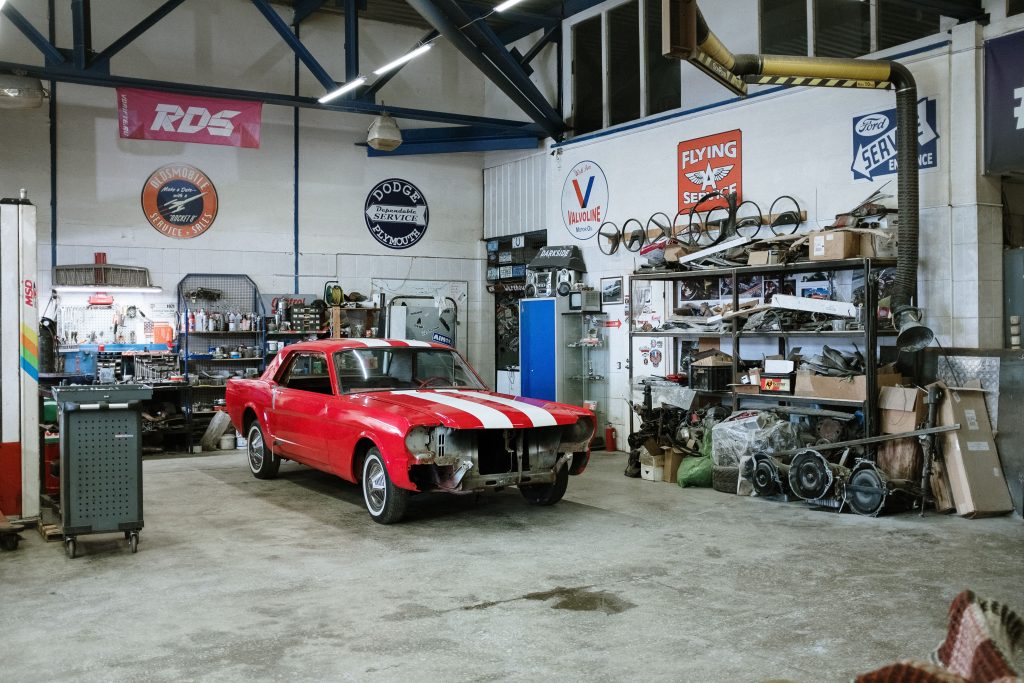
Whether you’re building a new garage, adding equipment, stocking up on inventory, or expanding your automotive business, Auto Shop Lend can help you explore financing options for your next move.
Affiliate Disclosure: We are an affiliate marketing website and may receive compensation from lending partners. We are not a lender, do not make credit decisions, and do not guarantee approval. Loan terms and rates are determined by individual lenders.
From everyday business needs to major expansion projects, explore financing options designed around automotive businesses and the work they do every day.
Auto Shop Lend focuses on financing for automotive businesses. The site helps shop owners explore financing options for business needs such as equipment, inventory, construction, expansion, and other shop-related expenses.
Depending on the financing option, funds may be used for business needs such as equipment, inventory, facility improvements, construction, expansion, and other qualified expenses.
Auto shops often need specialized equipment to operate and grow. Auto Shop Lend helps businesses explore financing options for equipment and other business needs.
Tire inventory can represent a significant expense for tire dealers and automotive service businesses. Inventory financing can help eligible businesses explore funding for stocking the products they need.
Garage construction financing can help eligible automotive businesses explore funding for building, expanding, or improving their facilities.
Yes. Auto repair shop expansion may require additional space, equipment, inventory, or facility improvements. Auto Shop Lend helps businesses explore financing options for these types of growth projects.
Transmission shops have specialized equipment, tools, inventory, and operating needs. Auto Shop Lend provides financing-focused resources for automotive businesses looking for funding options.
Building an automotive service company can require significant capital at nearly every stage of ownership. An entrepreneur purchasing an established garage has different financial needs from an owner adding service bays, replacing equipment, or opening another location. Depending on the project and provider, Mechanic business acquisition funding, automotive entrepreneur financing, repair shop scaling capital, wheel balancer financing, and vehicle lift loans may provide qualified businesses with ways to finance eligible acquisitions, equipment, improvements, and expansion.
Financing should not begin with the question, “How much can I borrow?” A better starting point is determining exactly what the business needs, what the project should accomplish, and whether expected cash flow can reasonably support the resulting payments.
This guide examines financing strategies for automotive entrepreneurs without promising approval, specific rates, or financial results.
Automotive repair facilities are capital-intensive businesses because revenue-producing employees often depend on expensive equipment and properly configured facilities.
A general repair garage may require lifts, compressors, diagnostic equipment, computers, specialty tools, alignment equipment, wheel-service machinery, inventory, shop-management software, and substantial working capital.
An acquisition introduces another group of expenses. The buyer may be purchasing equipment, inventory, customer relationships, goodwill, intellectual property, and potentially commercial real estate.
Expansion creates yet another financial situation. A growing shop may need additional service bays, employees, machinery, technology, inventory, and cash reserves.
Separating these expenses into individual categories helps an owner decide which financing approach is appropriate for each component.
Purchasing an established repair facility can provide advantages compared with building a business completely from scratch. An existing company may already have employees, equipment, customers, vendor relationships, operating procedures, and historical financial records.
Mechanic business acquisition funding may potentially help qualified buyers finance eligible costs associated with purchasing an existing automotive service company.
However, an operating business should never be purchased solely because financing is available.
Buyers need to investigate what they are actually acquiring.
Important information can include tax returns, profit-and-loss statements, balance sheets, existing debts, equipment lists, lease agreements, payroll records, vendor obligations, inventory, customer concentration, and historical revenue.
Equipment condition matters as well. A shop filled with aging machinery could require substantial additional investment shortly after closing.
Professional accounting and legal assistance may be appropriate when evaluating a significant acquisition.
Starting an automotive company requires more than technical knowledge.
Automotive entrepreneur financing may provide qualified owners with capital for eligible business expenses associated with establishing, purchasing, equipping, or developing an automotive operation, depending on the provider and financing product.
New owners should prepare a detailed business plan before committing to major expenses.
The plan should identify the services the company expects to provide, its target customers, local competition, pricing strategy, staffing requirements, facility needs, equipment requirements, and marketing approach.
Financial projections should be conservative.
A startup budget that assumes every service bay will remain occupied immediately after opening leaves little room for slower customer acquisition or unexpected expenses.
Entrepreneurs should also maintain adequate working capital after purchasing equipment. Payroll, insurance, utilities, advertising, software, parts, and other expenses continue even when revenue develops more slowly than anticipated.
Successful automotive businesses eventually encounter capacity limitations.
Repair shop scaling capital may potentially support eligible expansion projects when a qualified business needs additional equipment, service bays, employees, technology, inventory, or other resources.
Expansion should ideally solve an identifiable business problem.
For example, a shop may consistently have more appointments than available service bays. Technicians may wait for equipment. Certain profitable repairs may be outsourced because the facility lacks the necessary machinery.
Those situations can provide measurable evidence supporting expansion.
Owners should examine repair orders, bay utilization, technician productivity, customer wait times, declined jobs, outsourced services, and historical financial performance.
Adding capacity also creates expenses beyond the initial project. More service bays can require additional technicians, tools, parts inventory, uniforms, software licenses, insurance, utilities, and administrative support.
A complete expansion budget needs to consider those ongoing costs.
Wheel-service equipment can be an important revenue-producing asset for repair garages and tire businesses.
Wheel balancer financing may help qualified businesses acquire eligible balancing machinery while spreading the purchase cost over an agreed repayment period.
Before financing equipment, owners should investigate more than the advertised machine price.
Freight, installation, accessories, electrical requirements, employee training, warranties, maintenance, and future repair costs can affect the complete investment.
Utilization should also be considered.
An established shop can examine repair orders to determine how many balancing services it currently performs and whether existing equipment creates a bottleneck. A startup has less historical information and may need to rely on conservative projections and local market research.
Owners should obtain actual vendor quotes rather than relying on generalized equipment-cost estimates.
A lift can determine how efficiently technicians perform many common automotive repairs.
Vehicle lift loans may potentially allow qualified repair facilities to purchase eligible lifting equipment without paying the entire acquisition cost upfront.
Businesses can require different lift configurations depending on the vehicles and services involved. Equipment selection should consider rated capacity, intended use, available floor space, facility construction, manufacturer specifications, and installation requirements.
Safety should be a primary consideration.
Owners should follow applicable manufacturer instructions and workplace-safety requirements and use appropriately qualified installers where necessary.
The total project can extend beyond the equipment purchase itself. Freight, installation, electrical work, concrete requirements, accessories, inspections, and facility modifications can potentially increase the amount needed to place a lift into service.
The graph below shows how a hypothetical automotive company could allocate a $350,000 acquisition and modernization budget.
These figures are entirely illustrative. They are not industry averages, lender requirements, equipment quotes, guaranteed costs, or actual financing offers.
Hypothetical allocation for acquiring and upgrading an automotive repair operation.
$0$45K$90K$135K$180KBusiness acquisitionFacility improvem…Lifts and major e…Wheel and tire eq…Tools and technologyWorking capital
Illustrative example only. Actual acquisition, equipment and operating costs vary significantly.
| Hypothetical expense | Illustrative amount |
|---|---|
| Business acquisition | $175,000 |
| Facility improvements | $50,000 |
| Lifts and major equipment | $45,000 |
| Wheel and tire equipment | $25,000 |
| Tools and technology | $20,000 |
| Working capital | $35,000 |
| Total | $350,000 |
A project structured like this hypothetical example could lead an owner to investigate Mechanic business acquisition funding, automotive entrepreneur financing, repair shop scaling capital, wheel balancer financing, or vehicle lift loans, depending on the individual expense and financing provider.
Actual projects should be based on real purchase agreements, equipment quotes, contractor estimates, operating expenses, and other verified information.
The U.S. Small Business Administration’s 7(a) program is one legitimate financing option automotive business owners can investigate.
The SBA currently describes 7(a) as its primary business loan program. Eligible uses can include acquiring or improving real estate and buildings, working capital, purchasing and installing machinery and equipment, supplies, certain debt refinancing, and complete or partial changes of ownership. The maximum individual 7(a) loan amount is currently $5 million.
Official SBA 7(a) Loan Program
Those permitted uses can make the program worth investigating when comparing Mechanic business acquisition funding, automotive entrepreneur financing, repair shop scaling capital, wheel balancer financing, and vehicle lift loans for an eligible project.
The $5 million maximum does not mean a business will qualify for $5 million. SBA eligibility requirements include being an operating for-profit business, meeting applicable size requirements, being creditworthy, and demonstrating a reasonable ability to repay. Borrowers apply through participating lenders rather than receiving ordinary 7(a) financing directly from the SBA.
The SBA also currently lists 7(a) as usable for starting a business or acquiring a business or partial ownership interest.
For larger qualified projects, an important SBA policy change took effect on July 4, 2026.
Qualified borrowers who secure a 7(a) loan first can potentially access up to $5 million through 7(a) and another $5 million through the 504 program, creating a maximum of up to $10 million in combined SBA-backed financing under the new policy.
SBA announcement on combined 7(a) and 504 financing
Again, $10 million is a maximum under the combined structure, not a typical amount and not a promise that an automotive company will qualify.
A buyer considering Mechanic business acquisition funding should perform appropriate due diligence before signing a purchase agreement.
Revenue alone does not establish the value or health of a business.
A garage could generate substantial sales while suffering from high labor expenses, poor margins, excessive rent, aging equipment, declining customer volume, or significant debt.
Buyers should attempt to understand where revenue comes from and whether it is likely to continue after ownership changes.
Customer concentration is another consideration. If one fleet customer represents a large portion of sales, losing that relationship could materially affect the company.
Employee retention may also matter. Experienced technicians and service advisors can be important to the continued operation of an automotive service business.
An entrepreneur considering automotive entrepreneur financing should build projections that can withstand slower-than-expected growth.
Rather than preparing one optimistic forecast, consider multiple scenarios.
A conservative case can estimate what happens if customer acquisition takes longer than expected. A moderate case can represent reasonable performance, while a stronger scenario can demonstrate the effect of higher utilization.
Owners should calculate whether the business can still cover debt payments and ordinary expenses when performance is weaker than originally hoped.
Financial projections are estimates, not guarantees.
Their purpose is to help owners understand risk and cash requirements rather than create the most attractive numbers possible.
Owners exploring repair shop scaling capital should distinguish profitable growth from growth for its own sake.
A second location or larger building may increase revenue while simultaneously increasing fixed costs.
Additional rent or mortgage payments, management, insurance, equipment, utilities, payroll, marketing, and inventory can reduce the benefit of higher sales.
Before expanding, calculate the approximate sales required for the additional operation to cover its incremental costs.
Owners should also consider management capacity. A technician who successfully manages one location may discover that supervising multiple facilities requires different systems, employees, and responsibilities.
Capital can fund physical expansion, but financing cannot replace effective management.
When considering wheel balancer financing, evaluate the equipment according to the work it will actually perform.
An existing tire shop can review the number of wheel services performed each month, technician hours, equipment downtime, and jobs lost because of insufficient capacity.
If older machinery creates delays or requires frequent repairs, replacement could have operational value.
Newer equipment may also offer capabilities that an existing machine lacks, but owners should verify whether customers actually demand those services.
A more expensive machine is not automatically a more profitable machine.
The best investment is generally equipment that appropriately matches the shop’s workload, employees, services, and budget.
Businesses considering vehicle lift loans should determine how additional lifting capacity affects technician productivity.
Suppose a shop employs several technicians but frequently has fewer usable lifts than technicians needing them. Another lift could potentially remove a bottleneck.
On the other hand, adding equipment to a shop where bays regularly sit empty may not solve the company’s actual problem.
Owners should identify the constraint before investing.
Facility requirements are equally important. The building needs to be suitable for the particular equipment selected. Verify installation specifications directly with manufacturers, vendors, qualified installers, and other appropriate professionals.
One of the easiest mistakes when buying a business is using nearly all available cash to complete the purchase.
The business still needs money after closing.
Payroll remains due. Parts need to be purchased. Insurance, rent, utilities, advertising, software, waste disposal, taxes, and other expenses continue.
Equipment could also require immediate replacement.
Maintaining appropriate working capital can give the new owner financial flexibility during the ownership transition.
This is one reason acquisition planning should consider the complete project rather than merely the seller’s asking price.
The SBA specifically identifies both short- and long-term working capital as eligible uses under its 7(a) program.
Business owners should compare more than monthly payments.
Review the amount financed, down payment, interest rate or other financing cost, fees, repayment schedule, payment frequency, term, collateral requirements, guarantees, prepayment provisions, and total expected repayment.
A smaller monthly payment can sometimes result from a longer repayment period, which may increase the total financing expense.
Likewise, two products with similar payments can have substantially different terms.
Ask the provider to explain anything you do not understand before accepting financing.
Purchasing business equipment can also have tax implications.
Current IRS guidance states that for tax years beginning in 2026, the maximum Section 179 expense deduction is $2.56 million. The limit begins to phase down when the cost of qualifying Section 179 property placed in service during the year exceeds $4.09 million. Eligibility requirements and limitations apply.
IRS Publication 946 — How to Depreciate Property
Business owners should not assume that purchasing or financing a particular asset automatically creates a specific deduction. A qualified tax professional can evaluate the company’s circumstances and current tax rules.
Equipment should primarily be purchased because it makes operational and financial sense, not solely because of a potential tax benefit.
Whether the project involves Mechanic business acquisition funding, automotive entrepreneur financing, repair shop scaling capital, wheel balancer financing, or vehicle lift loans, organized documentation can make it easier for a provider to evaluate the request.
Requirements vary, but established businesses may be asked for financial statements, tax returns, bank statements, existing debt information, equipment quotes, purchase agreements, or details explaining how proceeds will be used.
Acquisition applicants may need information concerning both the buyer and the business being purchased.
Startups may need a business plan, financial projections, information about owner experience, vendor quotes, and documentation concerning available capital.
Providing these documents does not guarantee approval. It simply gives the financing provider more information on which to evaluate the request.
Your existing AutoShopLend page discusses financing for auto repair businesses, including equipment, working capital, expansion, acquisitions, lifts, tire machines, and diagnostic equipment.
Additional articles about shop acquisitions, wheel-service equipment, vehicle lifts, and multi-location growth can be internally linked when dedicated pages for those topics exist. I have not invented unverified internal URLs.
Financing can provide automotive business owners with access to capital, but borrowing works best when it is connected to a clearly defined business objective.
Mechanic business acquisition funding may be worth exploring when a qualified buyer is purchasing an established repair operation. Automotive entrepreneur financing may provide options for eligible startup or business-development expenses. Repair shop scaling capital can potentially support qualified businesses adding capacity or locations.
For equipment projects, wheel balancer financing may help eligible shops acquire wheel-service machinery, while vehicle lift loans may provide qualified businesses with another way to finance essential lifting equipment.
None of these financing categories guarantees approval, a particular rate, a specific amount, or business success. Providers establish their own underwriting requirements, permitted uses, rates, fees, and repayment terms.
Define the project first. Obtain real quotes and financial records. Calculate the complete cost. Maintain adequate working capital. Use conservative projections, compare financing offers carefully, and understand the repayment obligation before signing.
Disclaimer: AutoShopLend.com is not a lender, does not make credit decisions, and does not guarantee financing approval. Financing availability, rates, fees, amounts, permitted uses, and repayment terms are determined by individual financing providers. This article is general information and is not financial, legal, accounting, or tax advice.