

From new equipment and tire inventory to garage construction and business expansion, Auto Shop Lend helps automotive businesses find financing options to keep their shops running and growing.

Automotive management system financing and electric vehicle maintenance funding may help qualified automotive businesses invest in shop technology, EV service equipment, technician resources, and other eligible upgrades. Commercial fleet service funding and auto repair shop expansion loans can provide potential financing solutions for fleet repair capabilities, additional service bays, equipment purchases, facility improvements, and other qualifying business expansion needs.
Financing options designed around the needs of automotive repair and service businesses.
Get the funding you need to keep the parts, tires, and products your customers need in stock.
Upgrade the tools and equipment that help your technicians work efficiently and serve more customers.
Take your shop to the next level with financing options for improvements, expansion, and growth.
Whether you’re looking for equipment, inventory, construction, repairs, or expansion financing, start by telling us about your business and what you’re looking to accomplish.
Your shop is different from a typical business. Your financing needs can involve equipment, inventory, facilities, vehicles, tools, and expansion.
Whether you need inventory financing, construction financing, or funding for your next expansion, explore options for the needs that matter to your business.
When equipment needs replacing or inventory needs replenishing, access to the right financing can help you keep your business operating.
Opening another location? Expanding your garage? Adding services? Financing can help you turn your next business opportunity into a plan.
Whether you’re building a new garage, adding equipment, stocking up on inventory, or expanding your automotive business, Auto Shop Lend can help you explore financing options for your next move.
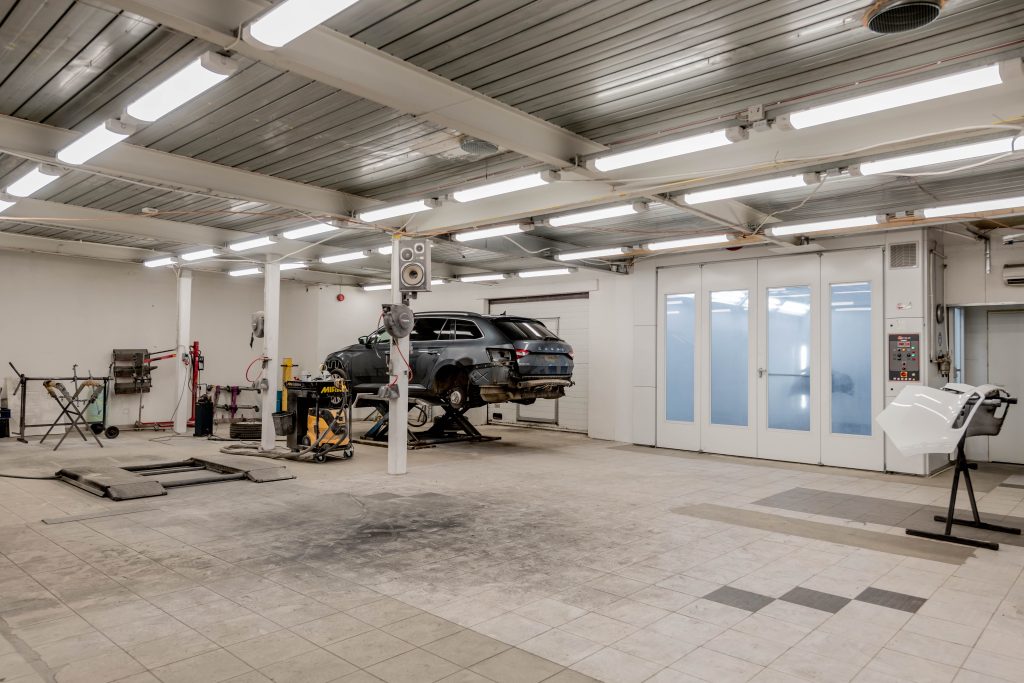
From everyday business needs to major expansion projects, explore financing options designed around automotive businesses and the work they do every day.
Auto Shop Lend focuses on financing for automotive businesses. The site helps shop owners explore financing options for business needs such as equipment, inventory, construction, expansion, and other shop-related expenses.
Depending on the financing option, funds may be used for business needs such as equipment, inventory, facility improvements, construction, expansion, and other qualified expenses.
Auto shops often need specialized equipment to operate and grow. Auto Shop Lend helps businesses explore financing options for equipment and other business needs.
Tire inventory can represent a significant expense for tire dealers and automotive service businesses. Inventory financing can help eligible businesses explore funding for stocking the products they need.
Garage construction financing can help eligible automotive businesses explore funding for building, expanding, or improving their facilities.
Yes. Auto repair shop expansion may require additional space, equipment, inventory, or facility improvements. Auto Shop Lend helps businesses explore financing options for these types of growth projects.
Transmission shops have specialized equipment, tools, inventory, and operating needs. Auto Shop Lend provides financing-focused resources for automotive businesses looking for funding options.
Automotive repair businesses are changing as vehicles become more technologically complex and customers expect faster, more organized service. A growing shop may need better management technology, specialized electric-vehicle equipment, additional capacity for commercial customers, and larger facilities with more productive service bays.
Financing can help qualified businesses spread eligible investments over time, but borrowing should support a clear operational purpose. Owners should understand what they are purchasing, how an investment could affect productivity or capacity, and whether projected cash flow can comfortably support repayment.
The following nine sections examine several areas where an automotive company may need capital while explaining how owners can approach expansion without sacrificing financial flexibility.
Technology increasingly connects the front office with technicians working in the service bays. Automotive management system financing may help qualified businesses address eligible technology investments involving repair orders, estimating, scheduling, inventory, customer records, technician assignments, invoicing, and other operational functions.
At the same time, shops preparing for a changing vehicle population may investigate electric vehicle maintenance funding for qualifying equipment, tools, technology, or other eligible expenses associated with expanding EV capabilities.
Commercial customers create another potential growth opportunity. commercial fleet service funding may be considered when a qualified repair company needs eligible capital to increase its ability to maintain business-owned vehicles.
For businesses that have outgrown their current locations, auto repair shop expansion loans can potentially support eligible facility improvements, equipment purchases, additional capacity, or other qualifying expansion expenses.
These investments should be evaluated together rather than separately. A new management platform might improve scheduling, but its value can be limited if the facility lacks enough bays to handle additional work. Likewise, adding equipment does not automatically generate more revenue if technicians are unavailable to operate it.
Management should begin by identifying operational bottlenecks. Once those problems are understood, the business can determine which investments have the strongest potential to improve productivity, service capacity, or customer experience.
A repair business can process hundreds or thousands of pieces of information each month. Estimates, technician notes, parts orders, customer approvals, service histories, invoices, inventory records, and schedules all need to remain organized.
Automotive management system financing can potentially help qualified businesses acquire or implement eligible technology without requiring the entire cost to be paid immediately from operating cash.
Technology may also support newer service categories. Businesses seeking electric vehicle maintenance funding should consider how diagnostic information, repair procedures, technician workflow, and customer communication will integrate with existing systems.
Companies serving business customers may use commercial fleet service funding to support qualifying investments needed to manage higher repair volume or specialized fleet requirements.
When additional work begins exceeding existing capacity, auto repair shop expansion loans may provide another potential path for qualified businesses planning eligible building improvements, equipment additions, or facility growth.
Owners should compare technology based on total implementation cost rather than advertised subscription price alone. Expenses can include data migration, computers, networking, employee education, integrations, support, updates, and recurring subscriptions.
A shop should also establish measurable goals. For example, management could monitor technician utilization, repair-order processing time, appointment capacity, inventory accuracy, or administrative hours before and after implementation.
Software should solve an identifiable problem. Adding technology simply because it is available can increase expenses without producing meaningful operational improvement.
Electric vehicles can create opportunities for independent automotive businesses, but shops should approach expansion carefully. Local demand, employee expertise, facility capabilities, equipment requirements, and insurance considerations can all influence whether adding a particular service makes financial sense.
electric vehicle maintenance funding may help qualified businesses finance eligible technology, tools, diagnostic systems, handling equipment, and other qualifying investments associated with their planned EV services.
Management technology can also become part of the project. Automotive management system financing might be considered for eligible technology investments designed to organize appointments, repair orders, inventory, technician workflow, and customer information.
A business servicing company-owned vehicles might simultaneously investigate commercial fleet service funding if its commercial customers are beginning to operate electric or mixed-powertrain fleets.
If the existing facility cannot accommodate the equipment or expected service volume, auto repair shop expansion loans could potentially help qualified companies finance eligible growth projects.
Owners should avoid assuming that an industry trend guarantees immediate local demand. Instead, they can review the vehicles currently entering the shop, services being referred elsewhere, customer requests, and local vehicle mix.
Employee preparation matters as much as equipment. A business can purchase sophisticated machinery, but those assets provide limited value without technicians who are properly prepared to use them.
A staged investment can allow capabilities to develop alongside actual customer demand.
Commercial fleet customers can offer repair shops recurring service opportunities because business vehicles require maintenance to remain productive. However, fleet work can also place greater demands on scheduling, parts availability, turnaround times, parking, and service capacity.
commercial fleet service funding may provide qualified businesses with potential capital for eligible equipment, facility, technology, or operational investments associated with developing fleet capabilities.
Efficient administration becomes particularly important as repair volume increases. Automotive management system financing may help address eligible technology investments that organize repair orders, service schedules, parts information, and customer records.
Shops servicing electric commercial vehicles may also investigate electric vehicle maintenance funding for qualifying equipment and technology required by the specific services they intend to perform.
A company that needs additional bays or a larger building might evaluate auto repair shop expansion loans for eligible facility and equipment costs.
Before aggressively pursuing fleet contracts, owners should determine whether their current operation can meet the expected service requirements without disrupting existing customers.
Fleet work can also affect cash flow. Commercial accounts may have payment arrangements different from ordinary retail customers, while the shop may need to purchase parts and pay technicians before collecting customer invoices.
Management should understand these timing differences and maintain sufficient working capital. Increasing sales does not automatically improve cash flow if expenses must be paid substantially earlier than incoming customer payments.
Consider a hypothetical established repair business planning a $600,000 expansion. These numbers are illustrative only and are not industry averages, lender offers, recommendations, or estimates of what a particular shop should spend.
| Example Investment | Illustrative Amount |
|---|---|
| Building and bay improvements | $180,000 |
| General service equipment | $125,000 |
| EV-related technology and equipment | $95,000 |
| Fleet-service capabilities | $80,000 |
| Management technology | $45,000 |
| Working-capital reserve | $75,000 |
| Total | $600,000 |
Illustrative $600,000 Expansion

Building/Bay Improvements   $180,000  ██████████████████
General Service Equipment   $125,000  █████████████
EV Technology & Equipment    $95,000  ██████████
Fleet Capabilities           $80,000  ████████
Operating Reserve            $75,000  ████████
Management Technology        $45,000  █████
In this hypothetical project, Automotive management system financing could potentially be evaluated for qualifying technology investments, while electric vehicle maintenance funding might address eligible EV-related expenditures.
The company could investigate commercial fleet service funding for qualifying investments associated with serving business vehicles and compare auto repair shop expansion loans for broader eligible facility and equipment needs.
The graph illustrates why expansion planning should include more than machinery. A shop may need electrical work, building improvements, installation, computers, inventory, employee education, marketing, and additional working capital.
Owners should replace these hypothetical figures with actual vendor quotes, contractor estimates, and business-specific projections before making financing decisions.
A detailed project budget can also reduce the possibility that a company completes the first stage of an expansion only to discover that insufficient capital remains for the equipment or operating expenses needed to make the project productive.
The U.S. Small Business Administration’s 7(a) program can be relevant to automotive businesses planning expansion. SBA currently describes 7(a) as its primary business loan program and says proceeds can be used for purposes including acquiring or improving real estate and buildings, short- and long-term working capital, purchasing and installing machinery and equipment, supplies, certain debt refinancing, and changes of ownership. The maximum 7(a) loan amount is $5 million.
That means qualified businesses investigating auto repair shop expansion loans may want to compare conventional financing with applicable SBA-backed alternatives.
A company considering Automotive management system financing can discuss its proposed technology expenses with participating lenders to determine whether specific expenditures qualify.
Similarly, shops seeking electric vehicle maintenance funding should confirm whether their proposed machinery, equipment, and related expenditures satisfy applicable program and lender requirements.
Businesses evaluating commercial fleet service funding may also investigate SBA alternatives when their planned use of proceeds fits program rules.
SBA’s current comparison indicates that 7(a) financing can support machinery and equipment, facility expansion or renovation, permanent working capital, inventory, business acquisition, startup costs, and certain refinancing. Maturity is generally 10 years or less unless real estate or equipment with a useful life exceeding 10 years is involved; real-estate maturity can extend to 25 years.
Useful external resources include the SBA 7(a) loan program and SBA lender and program comparison.
Eligibility and lender underwriting requirements apply, and SBA backing does not guarantee approval.
Financing should generally be evaluated according to the asset or business need being funded. A company purchasing equipment expected to remain productive for many years faces a different decision from a business paying short-term operating expenses.
With Automotive management system financing, owners should examine the expected useful life of technology, implementation expenses, recurring subscriptions, updates, support, and potential replacement requirements.
Businesses considering electric vehicle maintenance funding should evaluate the lifespan of equipment and whether expected utilization reasonably supports the proposed financing obligation.
For commercial fleet service funding, owners should consider how commercial account volume, payment cycles, parts expenses, technician payroll, and additional operating costs could affect cash flow.
Companies comparing auto repair shop expansion loans should evaluate whether the repayment period reasonably matches the expected benefits of facility improvements and long-lived equipment.
Monthly payment should never be the only comparison.
Owners should examine interest or financing charges, fees, repayment frequency, collateral, personal guarantees, prepayment provisions, maturity, and total expected repayment. A smaller monthly payment obtained by extending financing over a longer period can sometimes result in substantially greater total expense.
Conservative financial projections are especially useful. Management can model what happens if additional sales develop more slowly than expected or operating expenses are higher than anticipated.
A financing structure that works only under optimistic assumptions may create unnecessary risk.
Equipment purchases can have tax consequences, but potential tax benefits should not be the primary reason for making an unnecessary investment.
Businesses obtaining Automotive management system financing should consult a qualified tax professional about how purchased computers, hardware, software, implementation costs, and other technology should be treated.
The same principle applies to qualifying assets acquired with electric vehicle maintenance funding or commercial fleet service funding.
Owners using auto repair shop expansion loans may have several categories of expenditures—equipment, building improvements, technology, furniture, and other property—that receive different tax treatment.
IRS Publication 946 explains how taxpayers can recover the cost of qualifying business or income-producing property through depreciation and discusses Section 179 and other depreciation rules.
For tax years beginning in 2026, the IRS publication states that the maximum Section 179 expense deduction is $2.56 million. The limit is reduced when the cost of applicable property placed in service during the year exceeds $4.09 million. Additional qualifications and limitations apply.
Business owners can review IRS Publication 946 for additional information and discuss their specific circumstances with a qualified tax adviser.
Tax treatment varies according to the property and taxpayer involved. A financing provider’s marketing statement should not be treated as a determination that a particular purchase qualifies for a deduction.
Expansion should ultimately improve the underlying operation rather than simply make the business larger.
Before selecting Automotive management system financing, management should identify what operational improvements it expects from the technology and how those improvements can be measured.
When considering electric vehicle maintenance funding, owners should examine customer demand, technician capabilities, equipment utilization, facility requirements, and the specific services the company expects to provide.
A business researching commercial fleet service funding should determine whether it has sufficient technician capacity, parts availability, parking, scheduling flexibility, and working capital to serve commercial accounts effectively.
Before accepting auto repair shop expansion loans, management should prepare realistic projections showing how additional bays, equipment, or facility improvements are expected to contribute to the business.
Owners should also preserve liquidity. Expansion frequently creates expenses before it creates additional revenue. New employees may require training, equipment needs installation, marketing takes time to generate customers, and new services may develop gradually.
The objective is not simply to qualify for the largest amount available. The stronger approach is to determine how much capital the project actually requires and whether the resulting repayment obligation is sustainable under conservative assumptions.
Auto repair businesses can also use SBA resources when comparing eligible financing structures and professional tax advice when evaluating depreciation. Combining careful planning with realistic projections can help management make better long-term capital decisions.
Automotive repair is increasingly a combination of mechanical expertise, technology, facility management, customer service, and financial planning. Shops that want to grow may need better digital systems, additional equipment, more service capacity, specialized capabilities, and sufficient cash to support operations while those investments begin producing results.
Financing can provide qualified businesses with another way to make those investments, but it does not eliminate the underlying cost. Every payment must ultimately be supported by business cash flow.
Owners should therefore begin with operational needs instead of financing products. Identify where the shop is losing productivity, determine which services customers are requesting, calculate what additional capacity is realistically required, and obtain accurate estimates for equipment and facility improvements.
The next step is comparing available financing structures based on total cost, repayment obligations, asset life, and business risk—not merely the advertised payment.
Government resources can provide additional guidance. SBA programs may be relevant to eligible businesses financing working capital, equipment, real estate, or expansion, while IRS guidance can help owners and their advisers determine the appropriate tax treatment of qualifying property.
A disciplined expansion strategy protects working capital while investing in improvements that have a clear purpose. That balance can help an automotive company grow its capabilities without allowing unnecessary debt to undermine the financial stability the expansion was intended to strengthen.